
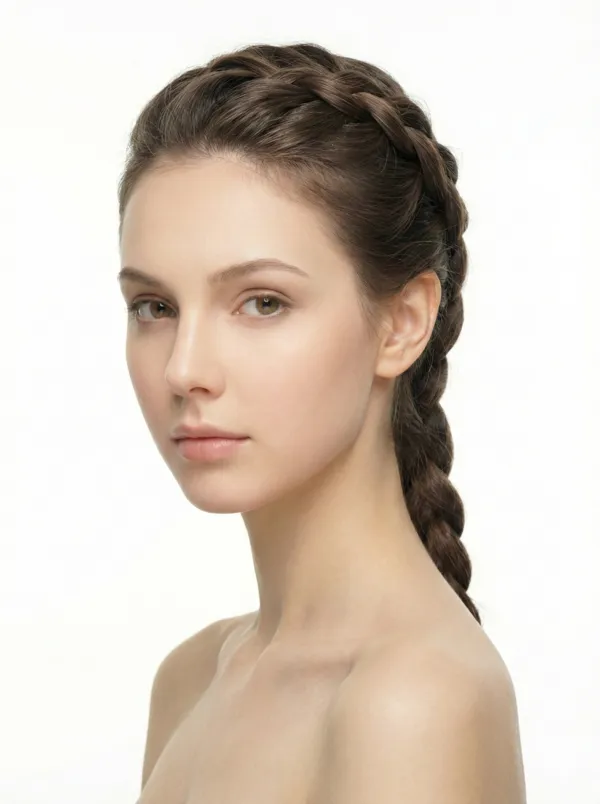
侧编辫
The side braid combines simplicity with elegance in a style that has stood the test of time. This classic look features hair braided and draped gracefully over one shoulder, creating a romantic silhouette that works for both casual days and formal occasions. The side placement adds visual interest and keeps the braid visible as part of your overall look.
What makes the side braid special is its versatility across contexts. A tight, neat side braid projects polish for professional settings, while a loose, textured version creates bohemian romance. This adaptability, combined with the practical benefits of keeping hair controlled, has made the side braid a perennial favorite.
多角度参考
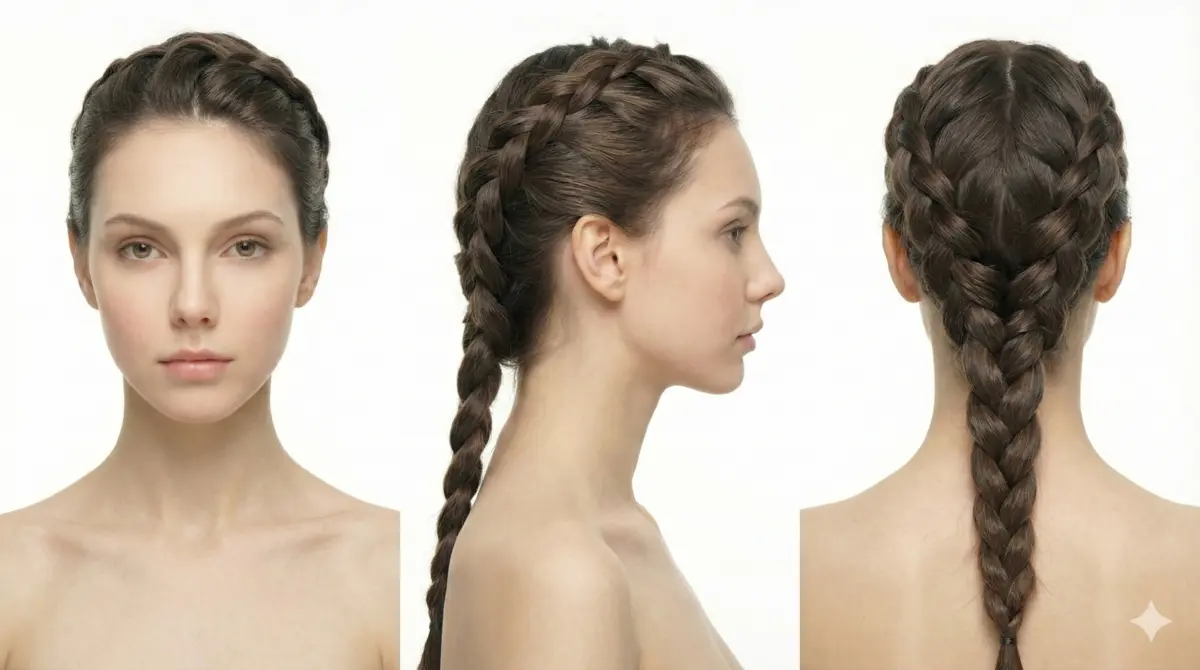
将此参考图展示给发型师,以获得最准确的效果
The Ancient Art of Braiding
Braiding ranks among the oldest hair styling techniques, with evidence of braided hairstyles dating back thousands of years across virtually every culture. Side braids specifically have appeared throughout history, from ancient Greek depictions to Victorian portraits.
Different cultures have imbued braids with various meanings, from status symbols to spiritual significance. The act of braiding has been passed down through generations, connecting modern practitioners to ancient traditions.
Today, the side braid represents both this rich heritage and contemporary style. It honors traditional techniques while adapting to modern aesthetics, appealing to those who appreciate timeless beauty with practical benefits.
Who Should Try the Side Braid?
Face Shape Compatibility
Side braids complement oval faces beautifully. The asymmetrical drape adds interest without disrupting natural balance.
The vertical line of a side braid elongates round faces. The asymmetry creates angles that slim the silhouette.
The soft curves of a braid contrast beautifully with angular features. A loose braid is particularly flattering.
Side braids draw attention away from a wider forehead. The braid over the shoulder adds visual weight at the narrower lower face.
A side braid adds horizontal interest. Keep the braid loose and full rather than long and tight for better proportion.
Ideal Hair Types
Perfect For
Perfect Occasions for the Side Braid
Everyday Wear
A simple side braid keeps hair tidy and beautiful for daily activities. It works for work, errands, or casual gatherings.
Outdoor Events
Braids control hair in wind and weather while maintaining a put-together appearance. Perfect for outdoor weddings or festivals.
Weddings and Formal Events
An elaborate side braid adds romantic elegance to formal attire. Dress it up with accessories for special occasions.
Active Days
The side braid keeps hair secure during activities while remaining more visually interesting than a ponytail.
Travel
Braids travel well, staying neat through long journeys and requiring minimal touch-ups at your destination.
Maintaining Your Side Braid
DDaily Care
- Braid hair before bed to prevent tangles and create natural waves
- Apply smoothing serum before braiding for a sleeker look
- Secure the end with a small elastic that matches your hair color
- Pull on braid sections gently to create a fuller appearance
- Re-braid tighter or looser depending on your activities
WWeekly Routine
- Deep condition to keep hair healthy for braiding
- Detangle thoroughly before braiding to prevent knots
- Give hair a break from tight braids occasionally
- Practice different braid variations for variety
- Evaluate elastics and accessories; replace as needed
MMonthly Tasks
- Trim ends to prevent scraggly braid tails
- Consider learning new braiding techniques for variety
- Assess hair health at stress points from braiding
- Update accessories to match seasonal trends or outfits
- Practice elaborate versions for upcoming special occasions
Creating the Perfect Side Braid
Prep the Hair
Apply texturizing spray throughout hair for grip. Brush to remove tangles completely.
Gather to the Side
Sweep all hair over one shoulder. Decide how high to start the braid; near the nape for classic, higher for more elaborate looks.
Divide and Braid
Divide hair into three equal sections. Cross the right section over the middle, then the left over the new middle. Continue to the end.
Secure the End
Wrap a small elastic around the end of the braid. Leave a small tail below the elastic.
Perfect the Look
Gently pull on each section of the braid to create fullness and a relaxed appearance. Apply hairspray to set.
Pro Tips from Stylists
- Pull out face-framing pieces before braiding for a softer look
- Start with a Dutch or French braid at the crown for more elaborate styles
- Wrap a strand of hair around the elastic to hide it
- Add ribbons, flowers, or pins for special occasions
- Pancake the braid (pull sections) more dramatically for fuller effect
- Try fishtail, rope, or other braid variations for different looks
Recommended Products
Essential Products
Optional Extras
Frequently Asked Questions
How long does hair need to be for a side braid?
Hair should be at least past the shoulders for a visible side braid. Longer hair creates more dramatic results, but medium-length hair can achieve beautiful shorter braids.
How do I prevent my braid from looking too tight?
Braid loosely from the start, then gently pull on each section after securing. This "pancaking" technique creates a fuller, more relaxed appearance.
Why does my braid look thin?
Try pancaking (pulling on sections), adding texturizing products before braiding, or leaving out face-framing pieces to create the illusion of fuller hair.
Can I sleep in a side braid?
Yes, sleeping in a loose braid prevents tangles and creates natural waves when you take it out. Avoid very tight braids which can cause tension.
How do I braid my own hair to the side?
Practice regularly; self-braiding gets easier with time. Use a mirror initially, and eventually your hands will learn the pattern by feel.
What variations can I try with side braids?
Try fishtail braids, Dutch braids, rope twists, or combinations. Start the braid higher on the head or incorporate braids from both sides for different looks.