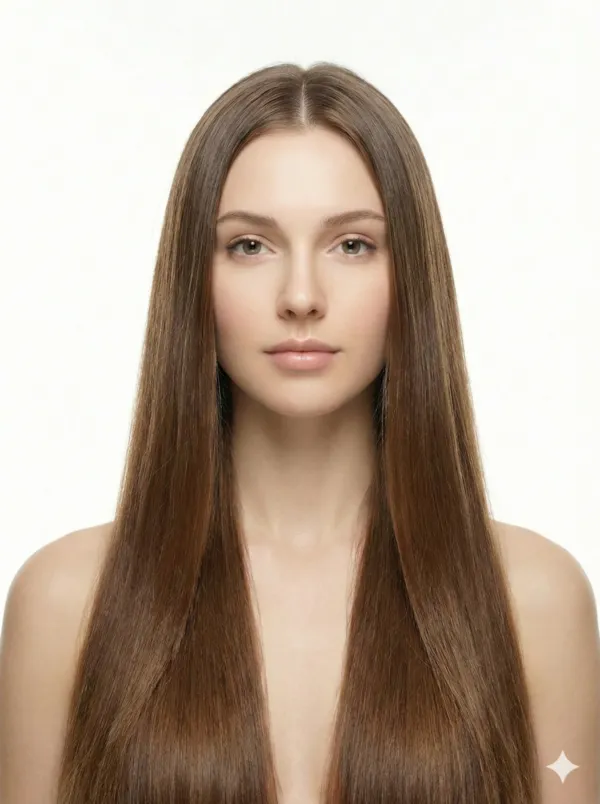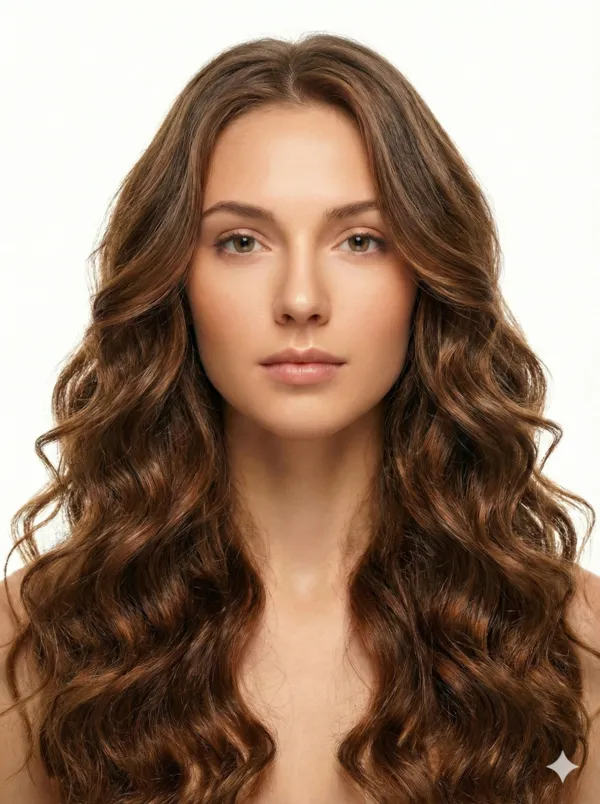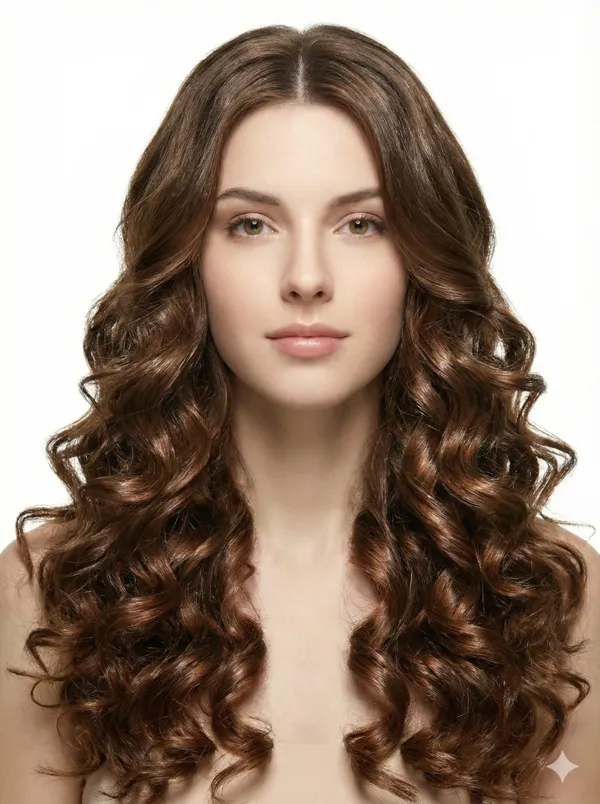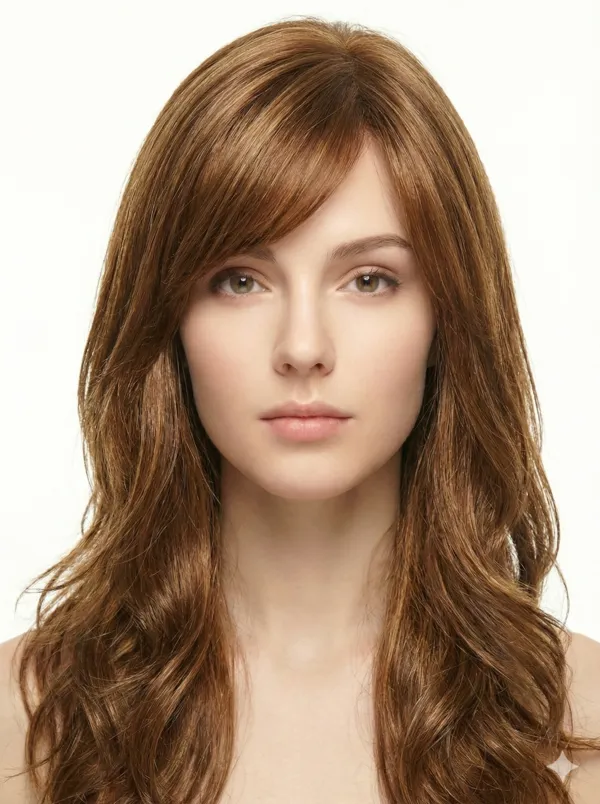
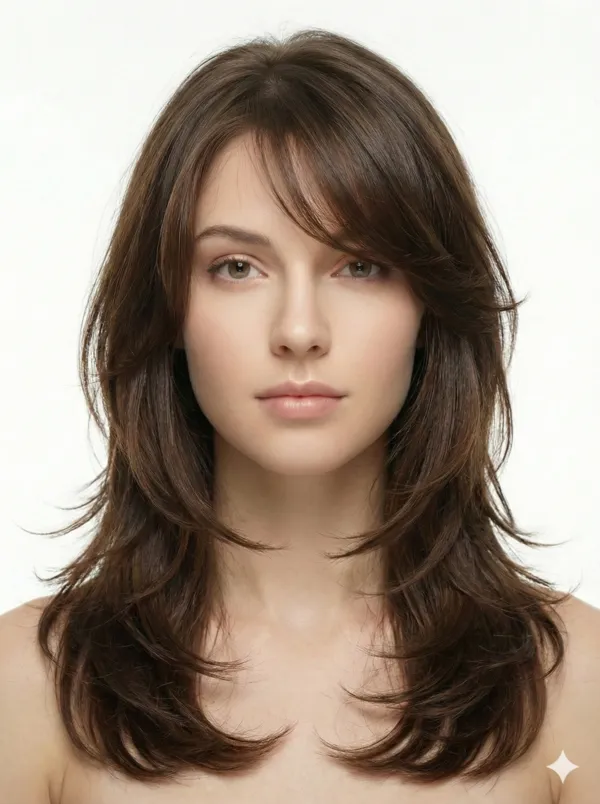
 Long Hair
Multi-angle reference
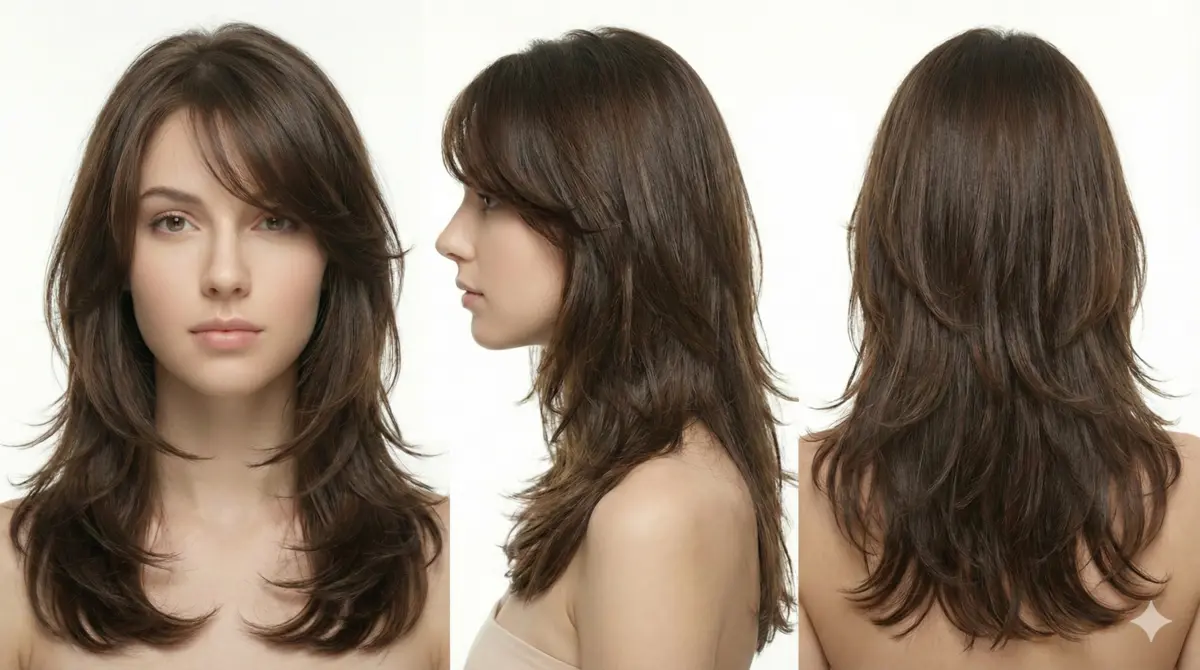
Show this reference to your stylist for the most accurate result.
The History of Layered Hairstyles
Layered haircuts have been a staple in hairdressing since the 1960s when innovative stylists began experimenting with removing weight from long hair. The revolutionary Vidal Sassoon introduced geometric, layered cuts that freed women from the rigid styles of previous decades.
The 1970s and 1980s saw layered hair reach new heights, quite literally, with voluminous styles popularized by Farrah Fawcett and the era's iconic feathered layers. These face-framing layers became synonymous with beauty and femininity, influencing hair trends for decades to come.
Modern layered cuts have evolved to be more subtle and versatile. Today's stylists use precision techniques to create seamless layers that blend naturally while adding movement. The contemporary layered long hairstyle honors its heritage while embracing a more natural, effortless aesthetic that suits modern lifestyles.
Who Should Try Layered Long Hair?
Face shape compatibility
Long layers create vertical lines that elongate a round face beautifully. Face-framing layers draw the eye downward, creating a slimming effect while maintaining softness around the cheeks.
Oval faces can wear virtually any layer style. Long, flowing layers enhance your naturally balanced proportions while adding dimension and movement to your overall look.
Soft layers around the face help soften angular features. Avoid blunt layers at the jawline; instead, opt for longer layers that flow past the chin for the most flattering effect.
Layers that begin below the cheekbones add width to the lower face, balancing a wider forehead. This creates harmony and draws attention to your beautiful bone structure.
Layers add horizontal movement that can balance a longer face shape. Consider adding shorter layers around the face and volume at the sides for optimal proportions.
Ideal hair types
Perfect for
Perfect Occasions for Layered Long Hair
Everyday Wear
Layered long hair looks effortlessly beautiful with minimal styling. The natural movement and body make it perfect for casual daily activities while maintaining a polished appearance.
Professional Settings
The sophisticated flow of layered hair projects competence and style. It can be worn down for creative environments or pulled back neatly for more formal business settings.
Special Events
Layers provide the perfect foundation for elegant updos and half-up styles. The dimension adds interest and prevents formal styles from looking flat or one-dimensional.
Active Pursuits
Layered hair is easier to manage during workouts and outdoor activities. The lighter weight makes ponytails more comfortable and less likely to cause headaches.
Photo Opportunities
Photographers love layered hair for its ability to catch light and create visual interest. The movement and dimension photograph beautifully from any angle.
Caring for Layered Long Hair
Daily care
- Brush gently starting from ends and working up to prevent breakage at layer points
- Apply a lightweight serum to mid-lengths and ends for smoothness and shine
- Use a silk scrunchie or spiral hair tie to avoid creasing layers when styling up
- Protect layers from environmental damage with a UV-protective spray
- Finger-comb through layers to maintain separation and natural movement
Weekly routine
- Deep condition focusing on the ends where layers tend to be driest
- Use a protein treatment monthly to strengthen hair at cut points
- Apply a leave-in conditioner to keep layers hydrated and manageable
- Clarify to remove product buildup that can weigh down layers
- Trim any visible split ends to maintain healthy-looking layers
Monthly tasks
- Schedule regular trims every 8-10 weeks to maintain layer shape
- Consult with your stylist about layer adjustments as hair grows
- Consider a gloss treatment to enhance shine across all layers
- Evaluate products and adjust for seasonal changes affecting your hair
- Deep cleanse scalp to promote healthy growth and vibrant layers
Styling Layered Long Hair
Prepare with Product
Apply a volumizing spray or mousse to damp hair, focusing on the roots. This creates a foundation for bouncy, full layers throughout the styling process.
Rough Dry First
Flip your head upside down and rough dry hair to 80% using your fingers. This technique lifts the roots and creates natural volume at the base.
Section and Style
Divide hair into sections and use a round brush to blow dry each section. Direct air down the hair shaft while brushing outward to enhance layer movement.
Define Layers
Use a large barrel curling iron to add subtle bends to the ends of each layer. This helps define the layered shape and adds dimension.
Finish and Set
Apply a light-hold hairspray and use your fingers to separate and define layers. Finish with a shine spray for a glossy, healthy appearance.
Pro tips from stylists
- Use a round brush that matches your desired amount of curl at the ends
- Direct blow dryer air downward to smooth the cuticle and enhance shine
- Add dry shampoo at roots for extra lift and volume between washes
- Sleep in a loose braid to maintain layer definition overnight
- Use velcro rollers on dry hair for quick volume at the roots
- Avoid over-brushing which can flatten layers and reduce dimension
Recommended Products
Essential products
Optional extras
Frequently asked questions
How often should I trim layered hair?
Layered hair should be trimmed every 8-10 weeks to maintain the shape. Layers grow out faster than one-length cuts, so regular maintenance keeps the style looking fresh and intentional.
Will layers make my hair look thinner?
When cut correctly, layers actually add the appearance of volume to fine hair. Ask your stylist for internal layers and avoid excessive thinning to maintain fullness while gaining movement.
Can I get layers if I have curly hair?
Layers work beautifully on curly hair, adding shape and reducing bulk. Find a stylist experienced with curly hair who cuts dry to ensure layers fall where they should.
What is the difference between layers and a shag?
Traditional layers are longer and more blended, while a shag features shorter, choppier layers throughout. Layered long hair maintains length while a shag prioritizes texture and volume.
How can I add more volume to my layers?
Blow dry upside down, use volumizing products at the roots, try velcro rollers, or ask your stylist for shorter face-framing layers. Root-lifting sprays also provide instant volume.
Should I get face-framing layers?
Face-framing layers are flattering on most face shapes and add dimension without committing to all-over layers. They highlight facial features and are easy to grow out if desired.
More inspiration