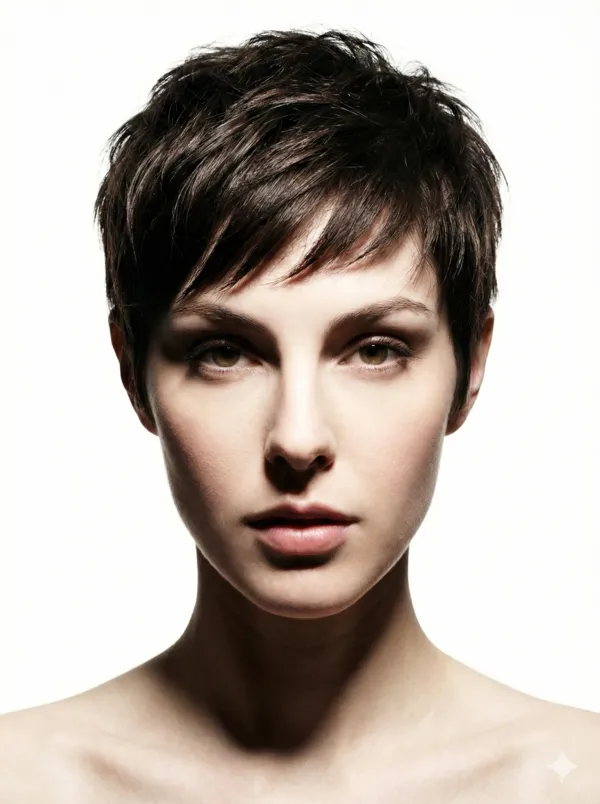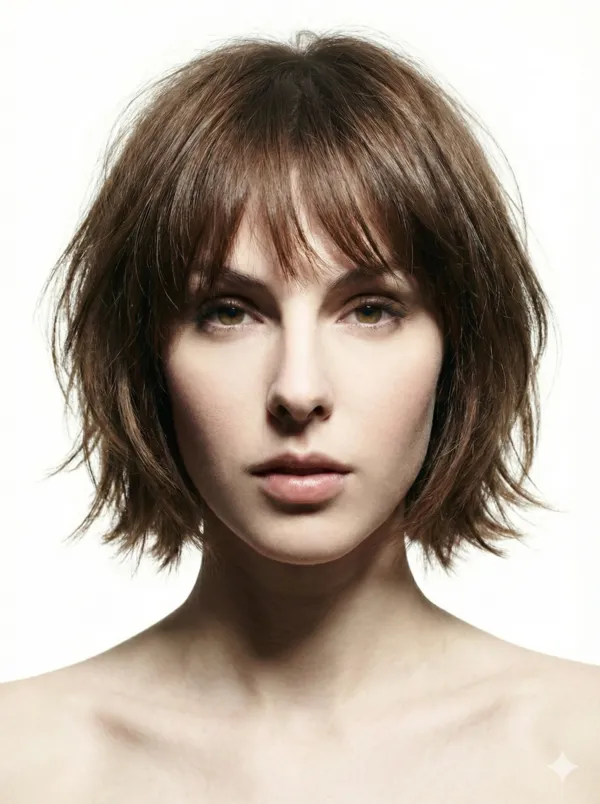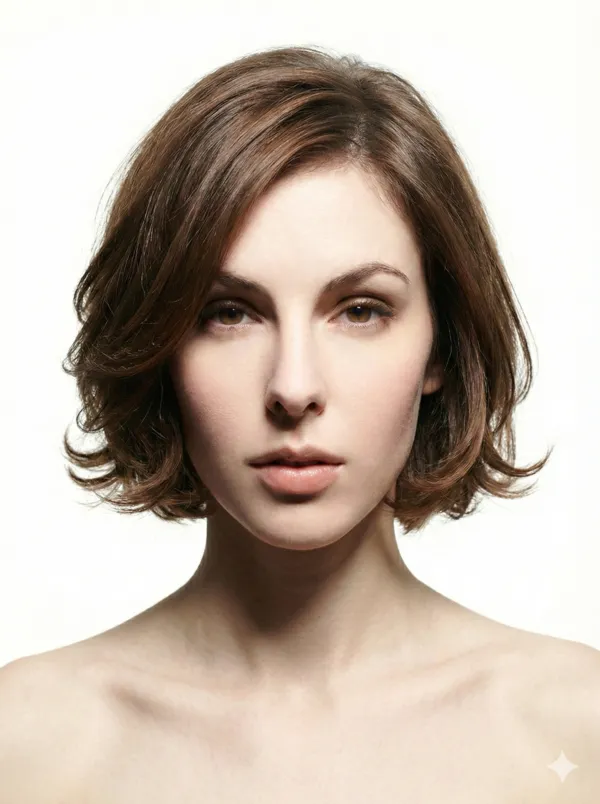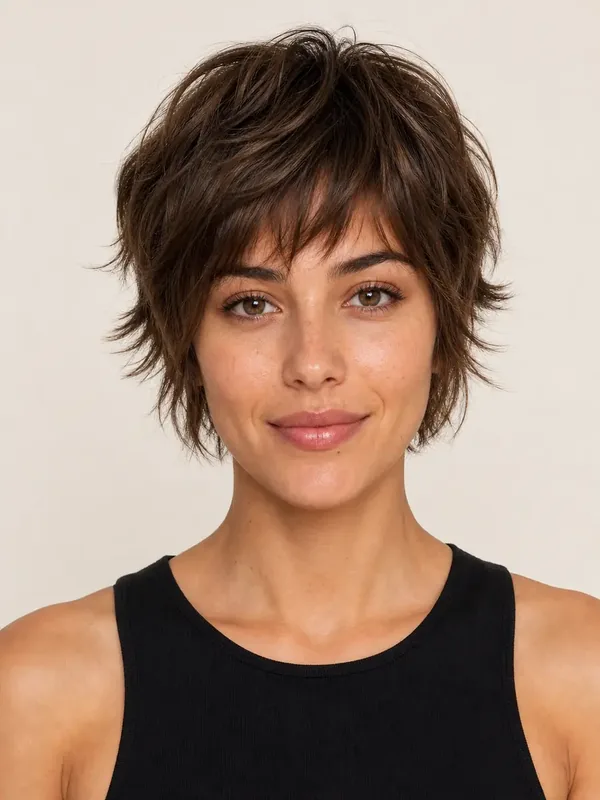
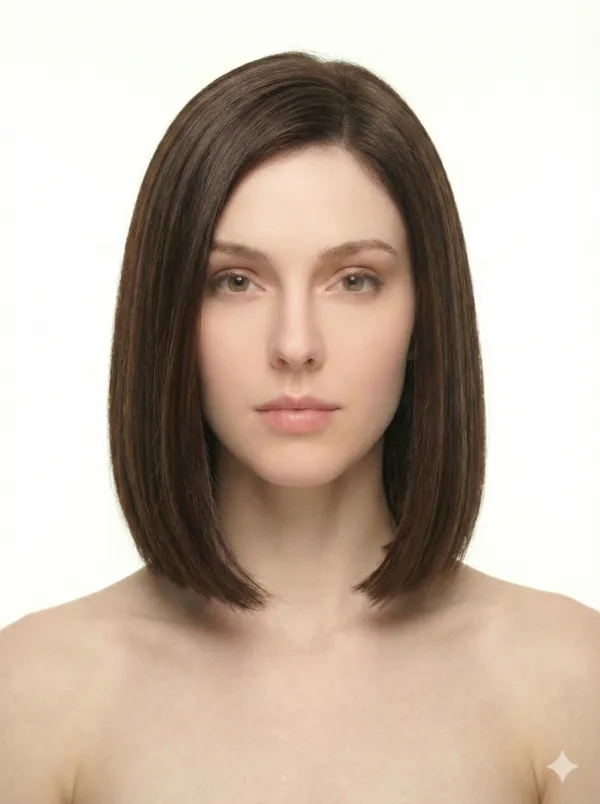
 Short Hair
Multi-angle reference
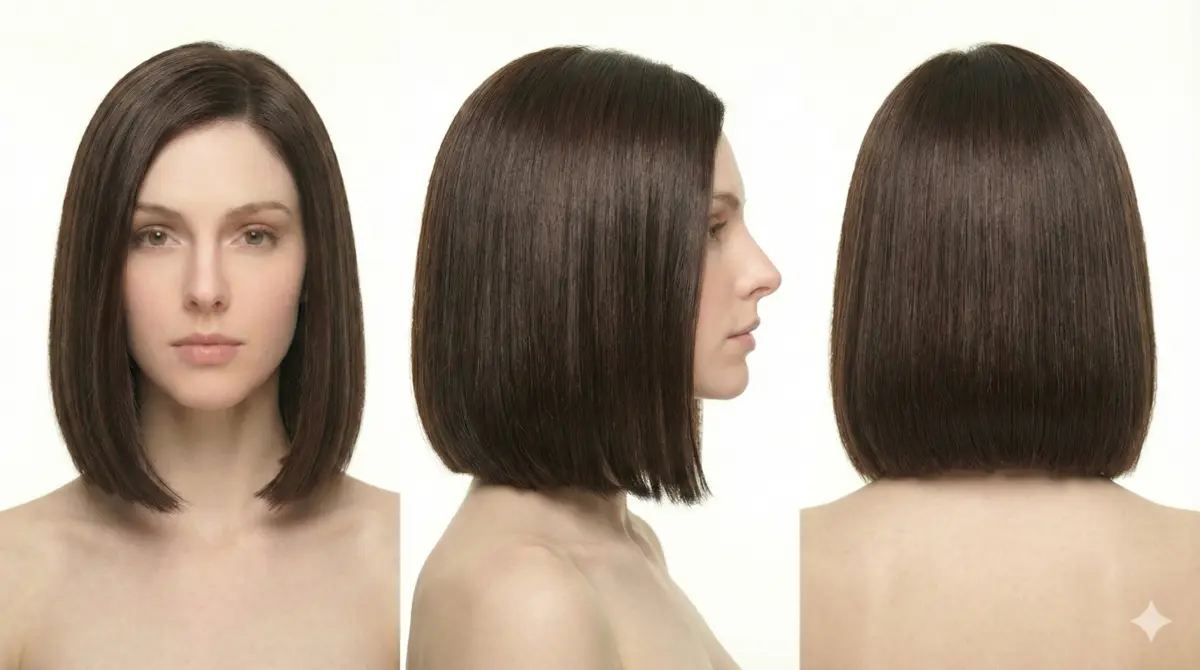
Show this reference to your stylist for the most accurate result.
The Revolutionary History of the Bob
The bob haircut revolutionized women's fashion when it emerged in the 1920s. Before this era, women traditionally kept their hair long, and cutting it short was considered radical. Pioneering women like Coco Chanel and silent film star Louise Brooks popularized the bob, making it a symbol of women's liberation and modern thinking.
Throughout the decades, the bob has been reimagined by each generation. The 1960s saw sleeker, more geometric versions popularized by Vidal Sassoon. The 1990s brought textured, disheveled bobs. Each iteration proved the cut's remarkable adaptability.
Today, the classic bob remains as relevant as ever. It continues to be chosen by influential women across politics, business, and entertainment, cementing its status as the haircut of capable, confident women everywhere.
Who Should Try the Classic Bob?
Face shape compatibility
Oval faces are ideally proportioned for the bob. The cut showcases balanced features without any adjustments needed.
A chin-length bob adds width at the narrowest point of heart-shaped faces, creating beautiful balance and proportion.
Softening techniques like texturing at the ends or slight layering help the bob complement angular features.
A bob that falls below the chin with subtle angles creates a slimming effect on round faces.
Add fullness at the sides and avoid length that hits at the narrowest point of the face. Consider bangs to reduce length.
Ideal hair types
Perfect for
Perfect Occasions for the Classic Bob
Professional Settings
The bob has long been the haircut of choice for professional women. It projects competence and authority while remaining entirely appropriate.
Formal Events
Despite its short length, the bob works beautifully for formal occasions. Add waves, pin back one side, or accessorize for elevated glamour.
Daily Life
The bob shines in everyday situations because it looks polished with minimal effort. Air-dried or quickly styled, it always appears intentional.
Job Interviews
The clean, professional appearance of a bob makes an excellent first impression. It says you are serious, capable, and put-together.
Photo Opportunities
The bob photographs beautifully from all angles. Its clean lines and face-framing shape create striking images.
Maintaining Your Classic Bob
Daily care
- Smooth with a paddle brush or round brush during blow drying
- Apply a light serum for shine without weight
- Use a flat iron for sleek days or a curling iron for texture
- Tuck behind ears for a quick style change
- Protect from humidity with an anti-frizz product
Weekly routine
- Deep condition to keep ends healthy and prevent splitting
- Clarify to remove product buildup that can dull the bob
- Give hair a break from heat styling when possible
- Evaluate the shape and note any areas growing unevenly
- Apply a protein treatment to maintain strength
Monthly tasks
- Schedule trims every 4-6 weeks to maintain the precise shape
- Discuss any adjustments with your stylist as hair grows
- Consider a gloss treatment to enhance shine and color
- Assess styling routine and products for optimal results
- Deep cleanse scalp to promote healthy growth
Styling the Classic Bob
Start with Clean Hair
Wash with a smoothing or volumizing shampoo depending on your hair type. The bob shows buildup, so clean hair is essential.
Apply Styling Product
Apply a light mousse for volume or a smoothing cream for sleekness to damp hair. Less is more to avoid weighing down the shape.
Blow Dry with Intention
Use a round brush to dry sections from root to tip. Curve ends under for classic polish or out for a more modern, playful look.
Perfect the Shape
Use a flat iron to smooth any flyaways and create precise lines. Pay attention to the perimeter for a polished finish.
Finish
Apply a light shine serum to the ends and a touch of hairspray if needed. The bob should look smooth but not stiff.
Pro tips from stylists
- Point the blow dryer nozzle downward for maximum smoothness
- Use a smaller round brush for more curve at the ends
- Try sleeping in a silk bonnet to preserve your style overnight
- Part on the opposite side occasionally for fresh volume
- Add texture spray for a more relaxed, lived-in bob
- Use rollers at the crown for quick, heatless volume
Recommended Products
Essential products
Optional extras
Frequently asked questions
Is the bob easy to maintain?
The bob requires regular trims (every 4-6 weeks) to maintain its shape but daily styling is relatively quick. Many find it easier than managing long hair.
Can I still tie my hair back with a bob?
Short bobs cannot be tied back, but longer bobs (lobs) can achieve small ponytails. Consider your need for updos when deciding on length.
Will a bob make my hair look thicker?
Often yes! Removing length removes weight that pulls hair flat. Many people with fine hair find bobs make their hair appear fuller.
What is the difference between a bob and a lob?
A traditional bob falls at or above the chin. A lob (long bob) falls between the chin and shoulders. The lob offers more styling versatility.
Can curly hair have a bob?
Absolutely! Curly bobs are beautiful. Work with a stylist experienced in cutting curly hair to account for how curls will spring up.
How do I grow out a bob?
Regular trims help maintain shape while growing. Your stylist can add layers gradually to avoid awkward stages. Expect 6-12 months to reach shoulder length.
More inspiration