 Men's
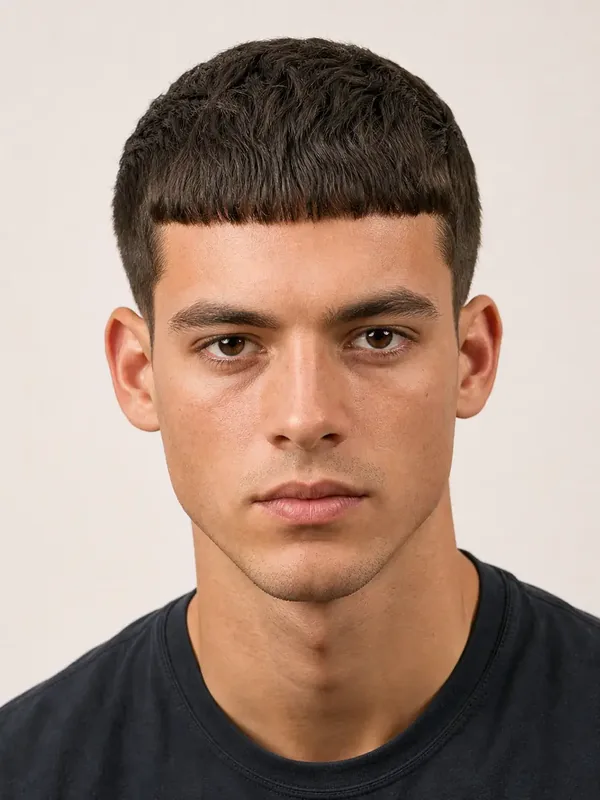
In AI Haircut, French Crop means a blunt, straight-across fringe with subtle top texture and a taper or fade. Real barbers use the name more broadly, so compare the versions below and take reference photos. Upload your own photo to the try-on to explore the shape before deciding what to cut.
French Crop and Related Styles: AI Haircut Prompt Definitions
From src/shared/data/hair-prompts.ts, checked November 9, 2026. These are AI Haircut styling settings, not measured results; quoted words are exact prompt excerpts. Columns show sides/back, fringe, and top instructions. Among these six settings, French Crop uniquely pairs "blunt, straight-across fringe" with a taper-or-fade choice; Caesar Cut gives a 1-2 inch top without fade wording. No numeric top length is specified for French Crop.
| Style | Sides and back | Fringe | Top |
|---|---|---|---|
| French Crop | "Taper or fade the sides and back short and clean" | "blunt, straight-across fringe"; "cropped horizontally across the forehead" | "short-to-medium length"; "subtle texture on top" |
| Textured Crop | "Fade or taper the sides and back for contrast" | "short, tousled fringe forward with separation and movement" | "medium-short length"; "heavily textured, piecey strands"; "matte, choppy texture" |
| Caesar Cut | "Keep the sides and back short and evenly trimmed"; no fade instruction | "short, straight fringe forward across the forehead horizontally" | "short, uniform length on top, around 1-2 inches"; "slight texture on top" |
| Crop Fade | "Fade the sides from short down to skin for a clean contrast" | "small forward fringe"; "blunt or lightly textured" | "short, textured crop on top"; "choppy texture throughout the top for a matte finish" |
| Edgar Cut | "Fade the sides and back short beneath the fringe line" | "bold, straight, blunt fringe across the forehead"; "sharp, horizontal, and clean" | "short, uniform length on top brushed forward"; "matte and textured with no shine" |
| Textured Fringe Fade | "Fade the sides from short down to skin for contrast" | "fringe falling forward over the forehead"; "soft and separated, not blunt" | "Keep length on top"; "choppy, piecey texture throughout the top and fringe" |
What to Ask Your Barber for a French Crop
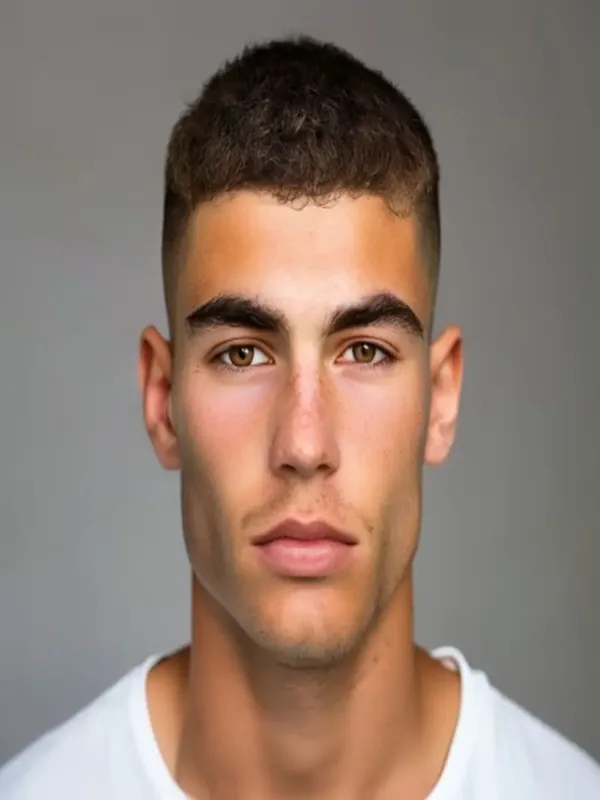
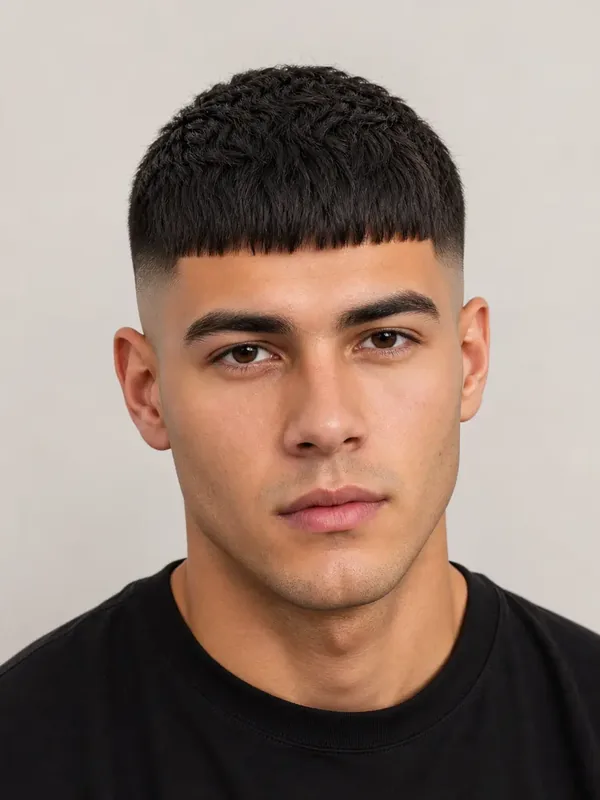
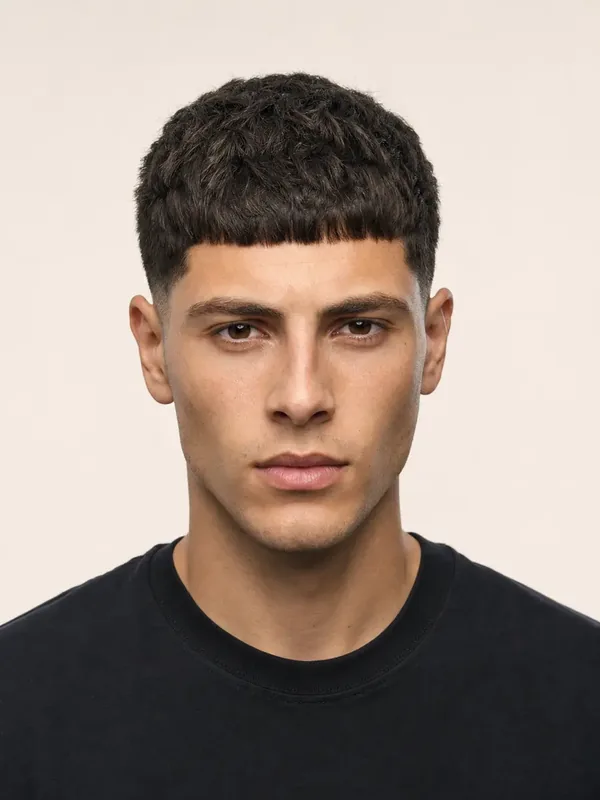
Compare these French Crop barber options by top texture, fringe shape, and side finish; they are not separate try-on settings. Bring a side and a back photo of the version you want.
Example request, adjust the numbers with your barber: please leave about 1–3 inches on top with subtle texture, a blunt forward fringe about 1 inch long adjusted to my dry hairline, and a low taper around the ears and nape, using the side and back photos I bring as references.
| Version | Sides and back | How it looks |
|---|---|---|
| Classic French Crop | Short scissor-cut sides or a low taper | Defined forward fringe with restrained top texture. |
| Short French Crop | Low taper with a compact top | Short fringe above the brows with less hair to reshape. |
| Long French Crop | Retained side length with a low taper | More top length and a longer fringe; discuss how much forehead to cover. |
| Contemporary French Crop | Low or mid fade, agreed with the barber | Stronger contrast between the defined fringe and shorter sides. |
| Curly or wavy French Crop | Soft taper around the ears and nape | Natural movement with the fringe shape assessed dry. |
| Messy French Crop | Short sides with a taper or low fade | Loose top texture while retaining a recognizable forward fringe. |
What our AI is instructed to change for a French Crop
This is the style part of the instruction our try-on sends with your photo, copied from the product code. The full instruction also asks it to change only the hair and keep your face, skin tone, lighting and background; results can still vary from photo to photo.
- Keep short-to-medium length on top with a blunt, straight-across fringe
- Style the fringe forward, cropped horizontally across the forehead
- Taper or fade the sides and back short and clean
- Add subtle texture on top while keeping the fringe defined
- Sharp, clean hairline framing the forehead
French Crop vs Caesar Cut vs Textured Crop
These names overlap, but the fringe and top finish are useful distinctions. A French Crop usually emphasizes a defined forward fringe with some texture above it. A Caesar Cut is generally shorter and more uniform, with a compact horizontal fringe. A Textured Crop emphasizes separated layers and a softer, broken fringe. In PureWow, barber Trevor Moots says a French Crop is about showcasing texture on top with a usually longer fringe, while a Caesar is done with a clipper guard and a sharper, deeper hairline; Daimon Barber explains the softer Textured Crop finish.
Our settings make the distinction explicit: French Crop requests a blunt fringe and subtle texture; Textured Crop requests a tousled fringe and heavier texture; Caesar Cut requests a uniform top around 1-2 inches and evenly trimmed sides, without specifying a fade. These are product instructions, not universal barber definitions. The comparison table reproduces the relevant wording.
A French Crop can also have a messy or wavy finish. Decide whether you want a straight fringe edge, visible separation, and retained side length before choosing a name. The versions table offers barber discussion options, not separate try-on settings.
French Crop Face Shapes, Hair Types and Hairline Guidance
Face shape compatibility
Start with a modest fringe and adjust its width to your forehead; a photo preview can help compare proportions.
A softer fringe edge and loose top texture can reduce the severity of a straight fringe against an angular jaw.
Keep some lift in the top and avoid a very wide, flat fringe if you want a longer-looking outline.
A forward fringe and retained side fullness can balance a long outline; avoid adding unnecessary height.
Keep the fringe light around a wider forehead and discuss side fullness rather than automatically choosing a high fade.
Ideal hair types
Who should consider a French Crop
French Crop Finishes for Work, Weekends and Events
Work and interviews
Smooth the sides and keep the fringe edge controlled with a light matte finish.
Casual days
Loosen the top with your fingers while leaving the forward fringe recognizable.
Formal events
Show your barber how you usually style the fringe so the finished cut works with your own routine.
French Crop Maintenance and Trim Routine
Daily care
- Dampen and reset the fringe if sleep or a hat has pushed it in another direction.
- Use a small amount of product and avoid pulling the fringe into separated gaps if coverage matters.
Weekly routine
- Wash according to scalp needs and product buildup, then condition the lengths as needed.
- Check the fringe dry before considering a trim; cutting wet waves too short can expose more forehead than intended.
Trim schedule
- Barber Trevor Moots, quoted by PureWow, recommends a visit at least every two to three weeks to keep the sides and back short; if you prefer a softer grown-in side, stretch it and refresh when the fringe loses its line.
- Ask for a lighter cleanup if you are growing a longer French Crop, and agree on side contrast before shortening it.
How to Style a French Crop Step by Step
Start with damp hair
Towel-blot without rough rubbing and gently guide the fringe forward.
Set the forward direction
Use a hairdryer on a comfortable low setting, directing air forward; diffuse waves or curls without stretching them straight.
Apply a light finish
Warm a small amount of matte paste between your hands and work through the top from back to front, using what remains on the fringe.
Define the French Crop fringe
Use fingers for subtle top texture and a comb only where you want a straighter front edge; check the outline from the side.
Pro tips
- For a two-product routine, try a light pre-styling spray on damp hair and a small amount of paste after drying; skip the spray if it makes hair stiff or dry.
- Keep curls soft with a light cream rather than forcing a blunt edge that fights their natural pattern.
- If the fringe splits at a cowlick, ask the barber to adjust its weight and direction before adding more product.
French Crop Styling Products and Tools
Essential products
Optional extras
Frequently asked questions
What is a French Crop haircut?
A French Crop combines a forward fringe, a short textured top and shorter sides and back. Specify the fringe edge and side finish with your barber because the name covers several variations.
What is the difference between a French Crop, Caesar Cut and Textured Crop?
A French Crop emphasizes a defined fringe, a Caesar Cut usually has a shorter uniform top, and a Textured Crop emphasizes separation and a softer fringe. AI Haircut uses distinct instructions for each, shown in the comparison table; barber terminology varies.
Is a French Crop good for thinning hair or a receding hairline?
It may soften visible recession when enough front hair can be directed forward. It cannot restore density, and a sparse fringe may split or show scalp. Ask your barber to judge coverage before committing to a blunt edge.
Does a French Crop suit a round or long face?
For a round face, discuss a little top lift and less width at the fringe. For a long face, consider retained side fullness and a lower fringe without extra height. These are styling suggestions, not measured suitability scores.
How do I ask my barber for a French Crop?
Use the concrete request above as a starting point, then show side and back reference photos with hair similar to yours. Confirm top length, the dry fringe line, and whether the sides should taper or fade before cutting.
How often does a French Crop need a trim?
Barber Trevor Moots, quoted by PureWow, recommends at least every two to three weeks to keep the sides and back short. Treat that as a starting point: the fringe losing its intended shape and the sides becoming bulky are the practical cues.
Can I see a French Crop on my own face before cutting?
Upload a front-facing photo to the AI Haircut try-on and choose French Crop. The preview changes the hair and helps you compare shape and proportion; your barber, hair density and growth pattern decide the real result.
Sources
- PureWow, The French Crop Haircut, Explained — Barber Trevor Moots on French Crop vs Caesar Cut (a Caesar "is done with a clipper guard, not showcasing any texture"); the article itself notes the cut can create the illusion of fullness at a receding hairline; Moots recommends a barber visit at least every two to three weeks; checked November 9, 2026.
- Daimon Barber, Textured Crop Haircut Guide — Layering and separation, French Crop comparison, hair types, face shapes, discussing the finish with a barber, and trim intervals (its maintenance section says three to five weeks, its overview table two to four weeks; vendor guidance, not an independently tested optimum); checked November 9, 2026.
Related guides
More inspiration